THE PROCESS

From Feasibility to Commissioning: How a College Solar Project Runs

Six stages with indicative timings. These are planning assumptions, not a delivery promise.

Send an enquiry →
How long does a typical college solar project take?
Planning assumption for a single-site project: around nine months from first scoping to commissioning. The DNO G99 grid connection is usually the longest-lead item, any funding application runs in parallel, and physical install is scheduled into the summer break. Multi-site programmes phase across several summer windows. Treat these timings as indicative: they depend on the DNO, the funding route and the roof survey.
Longest-lead item
G99 grid connection
Install window
Summer break
Multi-site programmes
Phased across summers
Timings
Planning assumptions

Where college solar projects usually slip

Three things tend to slow college solar projects: DNO connection delays, asbestos surprises on pre-2000 estate, and funding clarification rounds. Starting the grid application, the asbestos survey and the funding evidence early resolves most of that risk before scaffold goes up.

THE 6 STAGES

What happens, when, and what you sign

01

📊 Half-hourly meter data analysis

Week 1

Twelve months of half-hourly data are used to model baseline consumption, daypart use pattern and self-consumption potential. The output is a feasibility report with a PV system size, a capex range, modelled energy savings, payback and a funding route map.

02

🔧 Structural + asbestos survey

Weeks 2-3

A chartered structural engineer surveys every roof slope on every campus, with an asbestos R&D survey on pre-2000 buildings. System size, fixings strategy and any pre-install remediation are confirmed, and the output is structural sign-off plus an asbestos register update.

03

💷 Funding application

Weeks 4-8

Where a route is open, the auditable energy savings calculation, corporation board paper and bid narrative are prepared. As of 20 October 2026 the Scottish and Welsh Salix loans are open, no Salix scheme is open for England and PSDS Phase 4 is closed. The Director of Finance reviews, signs and submits.

04

⚡ G99 DNO + procurement

Weeks 8-20

G99 grid connection application to the DNO (Northern Powergrid, ENW, UKPN, NGED, SSEN, SPM/SPEN, NIE Networks). An MCS-certified installer is appointed via competitive tender or a pre-tendered framework, in parallel with any funding offer.

05

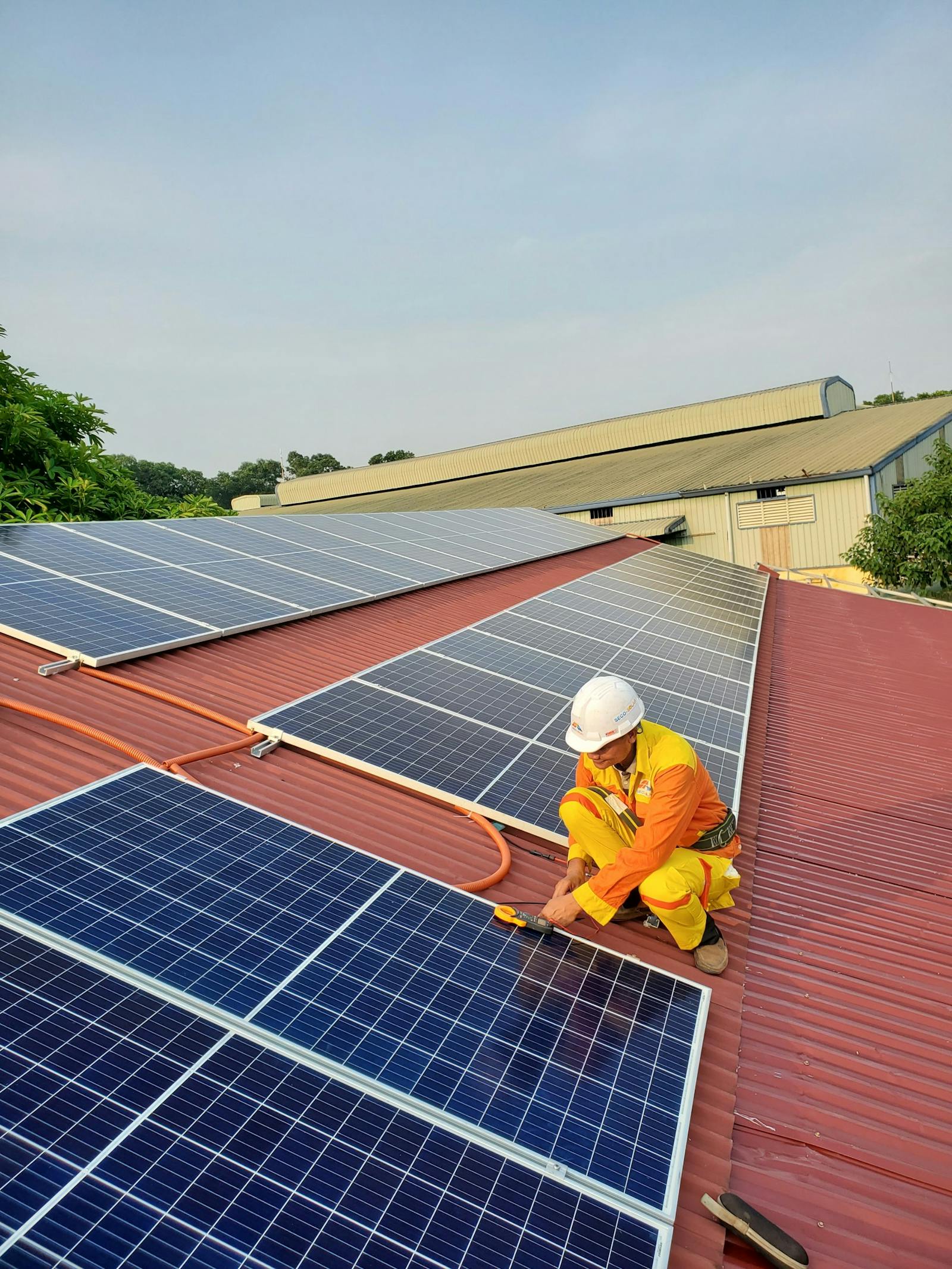
☀️ Summer-break install

Weeks 28-34

Physical install sequenced into summer holidays, with DBS checks for site staff and a KCSIE 2025 safeguarding induction run by the estates team. Scheduling avoids T-Level synoptic projects, apprentice end-point assessments and exam season. Multi-campus programmes phase across several summers.

06

✓ Commissioning + Climate Action Plan pack

Weeks 34-36

DNO witness testing, the final MCS commissioning certificate and Smart Export Guarantee registration with a licensee. A live-generation dashboard in the main entrance and an AoC Climate Action Plan evidence pack feed straight into the annual report.

Who does what

🎓

You (Sustainability Lead / Director of Estates)

  • Confirm authority and corporation board engagement
  • Share 12 months of half-hourly meter data
  • Coordinate site access for structural and asbestos surveys
  • Review the funding application and corporation board paper, sign
  • Brief the board at approval meeting
  • Approve the procurement and contractor selection
  • Walk the install once on site, sign the commissioning handover
  • File the AoC Climate Action Plan evidence pack into the annual report
⚙️

The project team (installer and advisers)

  • Feasibility study, energy modelling, system design
  • Commission structural and asbestos surveys
  • Draft the funding application and corporation board paper
  • Manage G99 DNO application end to end
  • Run procurement (competitive tender or framework)
  • Coordinate install team, scaffold, scheduling around the academic calendar
  • Manage DNO witness testing and commissioning
  • Install live-generation dashboard, register SEG, deliver evidence pack

What to check when you choose an installer

  • MCS certification (check the MCS register)
  • NICEIC or equivalent electrical registration
  • Insurance-backed workmanship warranty
  • Consumer-code membership where it applies
  • ISO 9001 / 14001 management systems

Send an enquiry · we reply by email

Tell us about your college

Tell us about your institution and we reply by email with the funding routes that look relevant for your nation and an indicative system size worked from your electricity spend. It is a desk exercise from what you send, so no site visit is needed to start. For what is open and closed by nation, with sources and dates, see the funding status on the grants and funding page.

What we won't do: add you to marketing lists or share your details without asking you first.

Why we ask what we ask: your nation, spend and postcode set which schemes apply and the indicative system size, and the building and timeline tell us what to look at first. We are an independent advisory, not an installer.