
Solar Panels for Colleges — Specialist FE, Sixth Form & Land-Based
Salix-funded designs from 100 kW to multi-megawatt portfolios. PSDS Phase 4 bid support. AoC Climate Action Plan implementation evidence. Quote within 7 working days from your half-hourly meter data.
EVERY INSTALLER WE MATCH MUST HOLD






Why solar panels for colleges now — what's changed in 2026?
UK Further Education colleges sit at a peculiar inflection point. In November 2022 the Office for National Statistics reclassified FE colleges and sixth form colleges from the not-for-profit institutions sector (NPISH) back into central government — retroactively to 1 April 1993. Overnight that unlocked Salix Decarbonisation Loans and the Public Sector Decarbonisation Scheme (PSDS) Phase 4 for the whole FE estate. At the same time, the AoC and EAUC's Climate Action Roadmap (Nov 2024) requires every college to appoint a Sustainability Lead and adopt a board-approved Climate Action Plan by end of 2025. Energy costs for a typical 8,000-learner FE college now run £600,000 to £1.6 million a year, against 16-19 funding rates that have risen barely 6% real-terms since 2010. Solar PV is the single fastest-payback estates intervention available — typically 5.5 to 7 years on a Salix-funded install, cash-flow-positive from year one. With Skills England (replacing IfATE in June 2025) sharpening the DfE's grip on sector strategy and the new £300m post-16 capacity capital fund opening in Feb 2026, FE college solar is a now-or-never conversation.
- Specialist FE college installers — we understand T-Level capital, ONS reclassification mechanics, Skills England transition, and AoC roadmap implementation
- Salix and PSDS Phase 4 application written for you — we write the energy savings calculation and bid narrative, your finance director just signs
- Multi-site group-corp portfolio programmes welcome — single bid, phased delivery, consolidated procurement
- 100% DBS-cleared install crews — KCSIE 2025 compliant on every campus, every project
Independent guidance, sourced data, no commission bias
How does the funding-to-commissioning process work?
A clear, transparent process — no hidden steps, no high-pressure sales.
- 01Day 1–7
Free desk feasibility
We pull your half-hourly meter data and roof drawings, model the system, and share an indicative proposal.
- 02Week 2–4
On-site survey
Our structural and electrical engineers visit. Final design and fixed-price proposal follow.
- 03Month 2–6
Permits & DNO
We handle planning (where required), G99 grid connection application, and any grant paperwork.
- 04Month 6–9
Install & commission
On site for 2–10 weeks depending on system size. Final commissioning, customer training, monitoring active.
Specialists across every sub-sector
Each sub-vertical has its own profile — sizing, payback, compliance, grants. Pick yours.
 Most common
 General FE Colleges
200–600 kW. 6-year payback. £180,000–£540,000.
Sixth Form Colleges
150–400 kW. 6.5-year payback. £135,000–£360,000.

Specialist Designated Institutions
100–300 kW. 7-year payback. £90,000–£270,000.
Land-Based & Agricultural Colleges
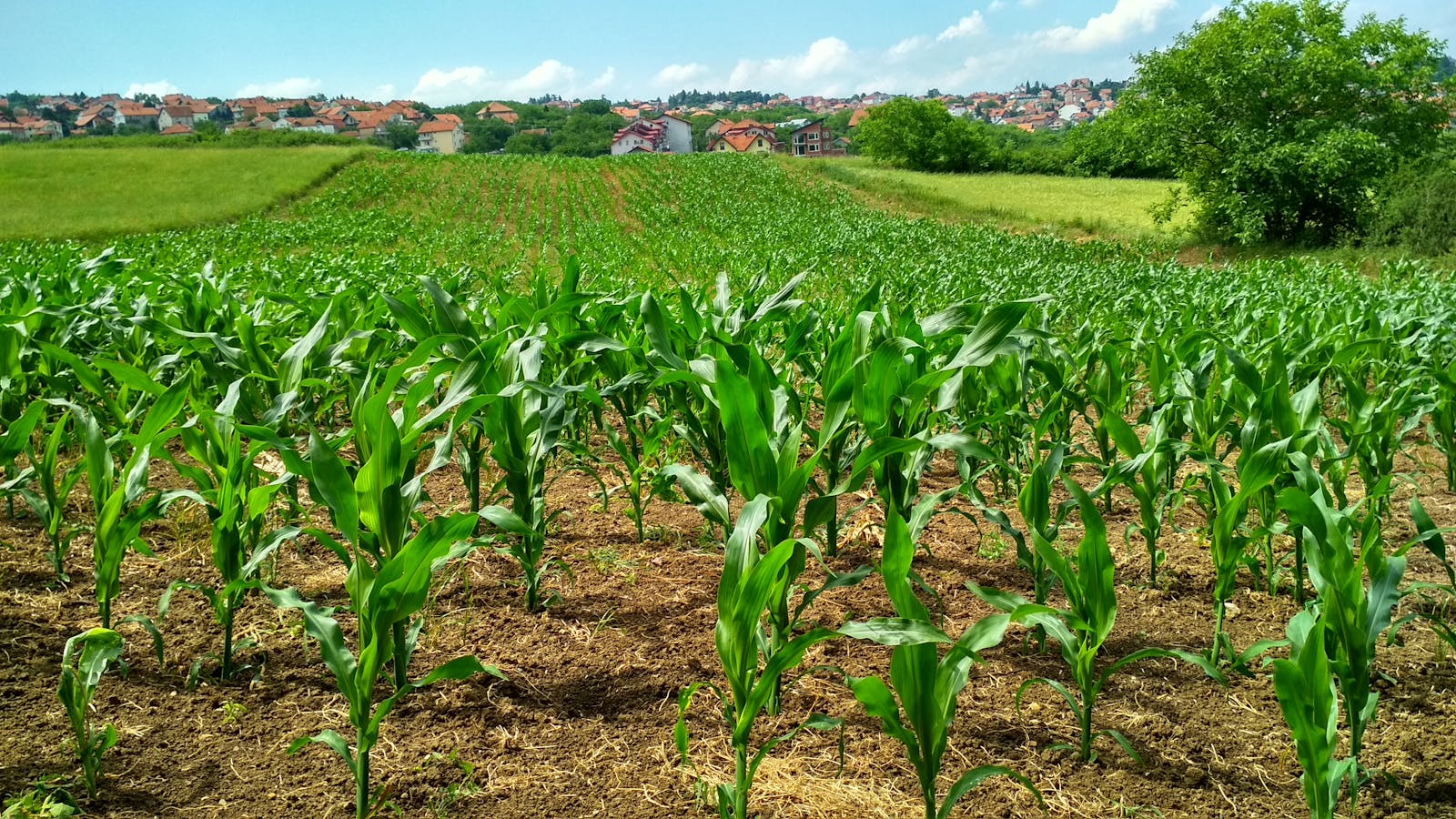
300–1,500 kW. 5.5-year payback. £270,000–£1,350,000.

Tertiary & Group Colleges (Multi-Site Corps)
500 kW – 2.5 MW (across multiple sites). 5.5-year payback. £450,000–£2,250,000 (portfolio programme).

Adult Community Education Centres
40–150 kW. 7.5-year payback. £36,000–£135,000.
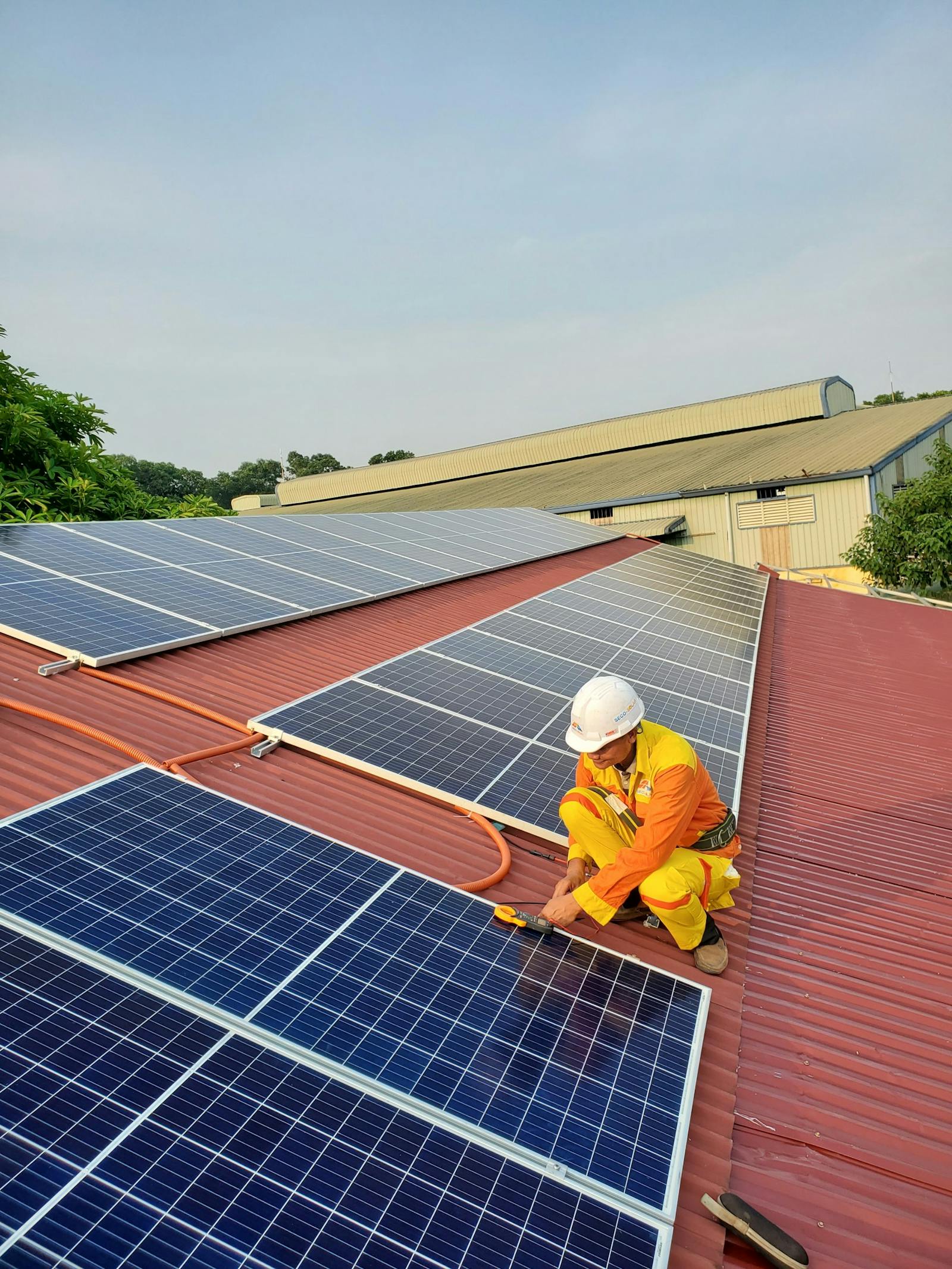
420 kW multi-site programme across an East Midlands group corp
A multi-academy group corporation operating four FE campuses across the East Midlands faced annual electricity costs of £1.05m, against 16-19 base funding rates that had risen 6% real-terms since 2010. The board-approved Climate Action Plan committed the group to a 50% scope-2 reduction by 2030 with PV installation flagged as the lead intervention. Mixed estate of 1970s teaching blocks, 1990s sports halls, and a 2017 STEM workshop new-build.
Specialist installers vs generalist contractors for solar panels for colleges
| Sector specialist MCS-certified, sector-focused | Generalist contractor General electrical / building | In-house DIY Self-managed | |
|---|---|---|---|
| MCS commercial certification | |||
| Half-hourly meter data modelling | |||
| Sector-specific compliance | |||
| IWA 10-year insurance-backed warranty | |||
| PPA / asset finance options | Sometimes | ||
| Fixed-price proposal | Sometimes | ||
| Sub-vertical case studies |
Locations we cover
solar panels for colleges delivered across the UK. Click any location for local cost data, council schemes, and grid connection timescales.

London
Greater London. 8,908,081 population. Greater London Authority 2030 net zero.

Birmingham
West Midlands. 1,141,816 population. Birmingham City Council 2030 net zero.

Leeds
West Yorkshire. 793,139 population. Leeds City Council 2030 net zero.

Cambridgeshire
Cambridgeshire. 678,000 population. Cambridgeshire County Council 2045 net zero.

Sheffield
South Yorkshire. 584,853 population. Sheffield City Council 2030 net zero.

Manchester
Greater Manchester. 568,996 population. Manchester City Council 2038 net zero.
What Sustainability Leads ask us
How much do solar panels for an FE college cost in the UK?
A typical general FE college install runs £180,000–£540,000 for a 200–600 kW system. Sixth form colleges typically £135,000–£360,000 (150–400 kW). Land-based colleges with large agricultural buildings can run £270,000–£1.35m (300–1.5 MW). Group corps spanning 3–15 campuses see portfolio programmes of £450,000 to £2.25m. Cost per kW is typically £900–£1,100 for sub-100 kW, falling to £700–£900/kW for installs over 250 kW.
Can FE colleges access Salix Finance and PSDS funding?
Yes, since November 2022. The Office for National Statistics reclassified the entire FE sector — general FE colleges, sixth form colleges, specialist designated institutions and land-based colleges — from the NPISH sector back into central government, retroactively to 1 April 1993. From that point all FE corporations became eligible for Salix Decarbonisation Loans and the Public Sector Decarbonisation Scheme. PSDS Phase 4 is now the highest-value capital grant route for sector solar.
What is the difference between Salix and PSDS for colleges?
Salix Decarbonisation Loan is interest-free debt repaid from energy savings — typically £30,000 to £600,000 per project, repayment up to 8 years. PSDS Phase 4 is a 100% capital grant operated by Salix on behalf of DESNZ — larger £100,000+ projects, no repayment. PSDS is harder to win (highly competitive, scored on carbon savings per pound) but worth far more when you win. Most colleges apply for whichever fits best for the specific project — Salix for solar-only standalone installs, PSDS where solar is paired with heat pumps or building fabric.
Our college is part of a multi-site group corporation — can we apply for funding portfolio-wide?
Yes — and it's actively encouraged. A single Salix or PSDS application can cover a multi-site rollout across an entire group corp (NCG, LTE Group, Capital City College Group, Luminate etc.). Procurement, DNO liaison, monitoring and commissioning can be consolidated. Most group corps see better unit economics this way — typically £700–£850/kW installed at portfolio scale, against £900–£1,100/kW for individual-site projects.
How does solar fit with our T-Level capital programme?
Solar typically fits as a complementary measure rather than a competing capital line. T-Level capital funds new workshop space; solar can be designed into the roof of that new build at marginal incremental cost. The DfE explicitly favours T-Level capital bids that embed sustainability — solar inclusion can improve bid scoring. Alternatively, solar is funded separately via Salix (operational savings route) and the T-Level capital pot is untouched.
What does the AoC Climate Action Roadmap require us to do?
The AoC and EAUC's joint Climate Action Roadmap (launched November 2024) requires every UK college to: appoint a board-level Sustainability Lead, adopt a Climate Action Plan approved by the corporation board by end of 2025, embed climate education across the curriculum, and report progress publicly via the EAUC Sustainability Leadership Scorecard. Solar PV is the single fastest demonstrable action in any Climate Action Plan — implementation evidence in months, not years.
Modelled outcomes for a 280 kW general FE install
T-Level Capital Fund round 5 opens August 2026
£180m available with green-skills weighting increased to 12% (from 8%). Roof-mounted solar in new T-Level workshops is increasingly decisive for bid success. Start scoping now.
Read T-Level Capital guide →Campuses with workshops face the same rates — see UK manufacturing electricity costs.
What does the Salix Decarbonisation Loan delivery actually look like?
Half-hourly meter data analysis
You send 12 months of HHD; we model baseline consumption, daypart use pattern, and self-consumption potential. Free of charge.
Structural + asbestos survey
Chartered structural engineer surveys every roof slope; asbestos R&D survey on pre-2000 buildings. We confirm system size and fixings strategy.
Salix or PSDS bid drafted
We write the energy savings calculation, corporation board paper, and bid narrative. Your Director of Finance reviews and signs.
G99 DNO + procurement
G99 application to your DNO (parallel-tracked). MCS-certified installer appointed via competitive tender or framework.
Summer-break install
Physical install sequenced into summer holidays. DBS-cleared crew. No disruption to T-Level synoptic projects or apprentice EPAs.
Commissioning + Climate Action Plan pack
DNO witness testing, SEG registration, live-generation dashboard install, AoC evidence pack drops straight into the annual report.
Free · emailed within 2 working days
Get your college funding & feasibility summary
Tell us about your institution and we'll email a governor-ready funding & feasibility summary: which routes actually apply to you (Salix, PSDS, Great British Energy, mayoral and combined-authority schemes), an indicative system size and capex band worked from your electricity spend, and any red-flag eligibility issues. A desk exercise from what you send — no site visit needed to start.
What we won't do: pass your details to installers without your permission, add you to marketing lists, or ring you out of the blue — we don't even ask for a phone number.
Why we ask what we ask: your spend and postcode set the indicative system size, capex band and which regional schemes you can access — without them the summary would be generic. Reviewed by SEO Dons Editorial. We are an independent advisory, not an installer.