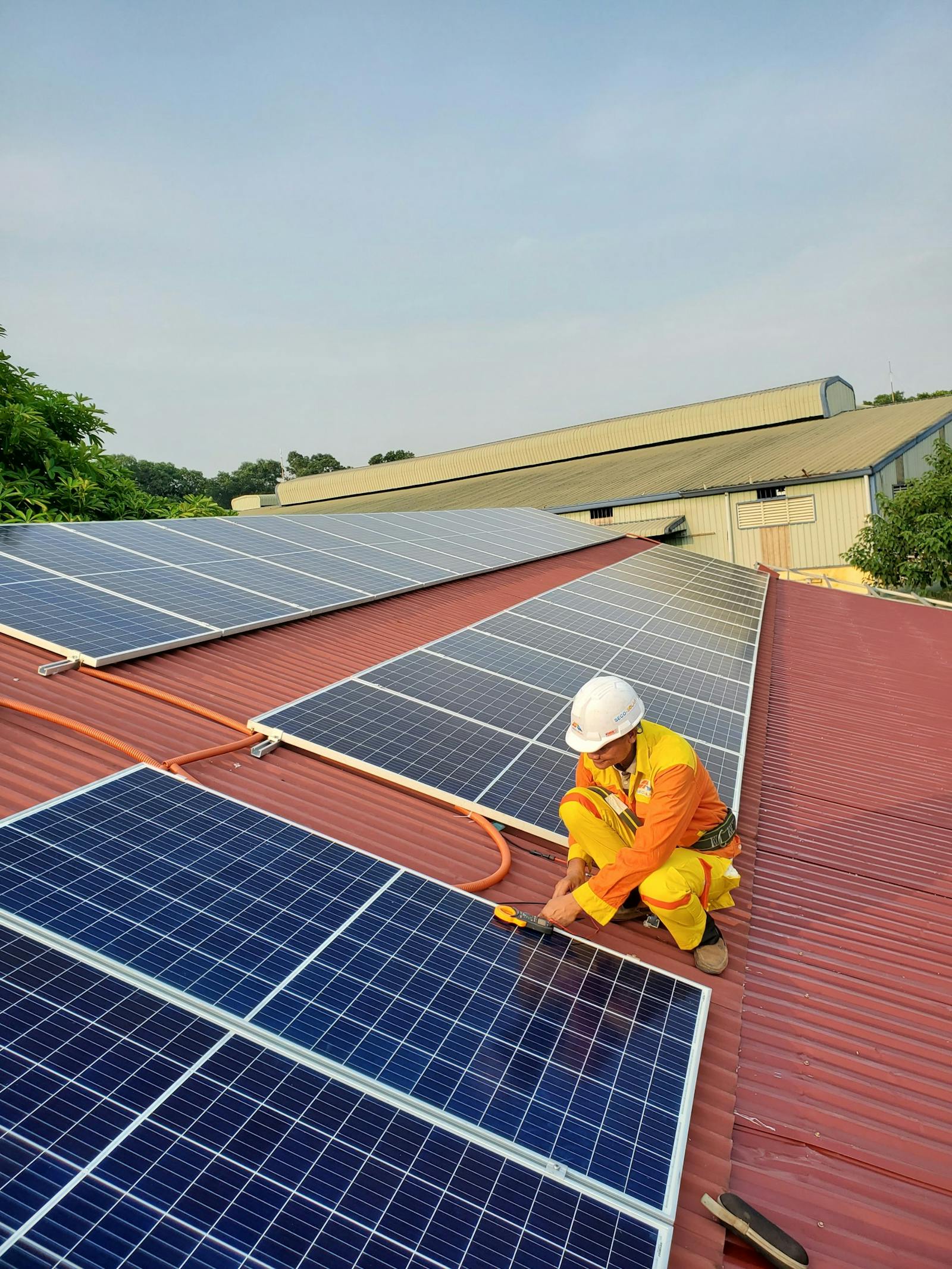
Should an FE college add battery storage to its solar PV install?
Yes for sixth form colleges (term-time-only use), adult community education centres (evening use), and SDIs (24/7 residential) — battery typically lifts self-consumption by 15-25 percentage points and pays back within 6-8 years. No for land-based colleges and large general FE corps with strong 24/7 baseload — self-consumption already above 70%, battery delivers diminishing returns. The decision should be made per-campus from half-hourly meter data analysis, not as a blanket choice.
- Battery cost
- £80-140 per kWh installed
- Typical sizing
- 50-200 kWh per campus
- Self-consumption uplift
- 15-25 pp typical
- Payback
- 5-8 years
Side-by-side decision matrix
| Sub-vertical | Battery recommended? | Reason |
|---|---|---|
| General FE main campus | Marginal | Self-consumption already 60-70% from year-round adult cohort. Battery delivers 8-15pp uplift; payback 7-9 years. |
| Sixth form college | Yes | Term-time-only use pattern; battery shifts weekend + summer generation. 50-150 kWh typical; payback 6-7 years. |
| Specialist designated institution | Yes (smaller) | 24/7 residential occupancy; smaller battery (50-100 kWh) for peak-shaving. Payback 6-7 years. |
| Land-based college | Marginal-No | 24/7 farm operations drive 75-85% self-consumption. Battery delivers diminishing returns; payback 8-10 years. |
| Multi-site group corp | Per-campus | Decision varies by individual campus use pattern; some yes, some no. |
| Adult community education centre | Yes (essential) | Evening use pattern; battery essential to drive self-consumption from 25% to 70%. Payback 4-5 years with MCA grant. |
Economics — when battery pays back
Battery storage at 50-200 kWh typically costs £80-£140/kWh installed including BMS and hybrid inverter integration. Payback economics depend on three drivers:
- Self-consumption uplift — every percentage point shifts a kWh from low-value export (typically 4-12p/kWh SEG, as at June 2026) to high-value avoided import (22-28p/kWh)
- Peak-tariff avoidance — discharging during 4-7pm peak windows on TOU tariffs saves marginal pence per kWh
- Capacity Market or DFS revenue — battery participation in grid flexibility services generates modest additional revenue
How to size the battery
Sizing follows the campus use pattern, not the PV array size:
- Calculate average evening peak demand kWh (5-9pm window typical)
- Size battery for 60-80% of that peak demand
- Typical sizing: 50-150 kWh for sixth forms and SDIs; 100-200 kWh for general FE; 200-500 kWh for land-based with significant evening livestock operations